What to Know About a Desert Pullout in Dubai
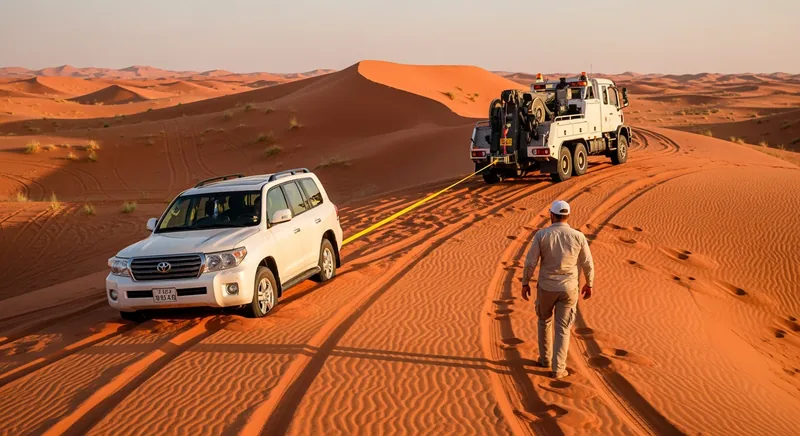
Driving in Dubai often means mixing highway cruising with stretches of open desert. The city itself is polished and well signposted, but a few kilometers in any direction and the landscape shifts to sand and gravel tracks. If you spend time on roads near Al Ain or out past the last exits of Sheikh Zayed Road, you will eventually see someone parked on the shoulder, hood up, or stuck at the edge of a dune. That moment, when a vehicle stops moving under its own power in a remote area, is what people mean by a desert pullout. It is not a scenic overlook. It is the point where the car refuses to go further and you need help fast.
A desert pullout can happen for many reasons. A tire blows on a hot afternoon, the battery gives out after a long night drive, or you misjudge a sand track and sink the axle into soft sand. I have seen all three in my years on the road here. Each case needs a different approach, but the basics of staying safe and getting moving again stay the same. The key is to treat the situation as a vehicle breakdown in a harsh environment, not just a roadside inconvenience.
Why Desert Pullouts Are Different
Breakdowns in the city are straightforward. You call for help, wait on a sidewalk, and a tow truck arrives within half an hour. On a desert pullout, the conditions change. Temperatures inside a car parked in direct sun can hit dangerous levels within minutes. Phone signal can be patchy. Landmarks look alike, and giving your exact location to a dispatcher becomes harder than you expect. Emergency Roadside Assistance services in the UAE are set up for this, but you need to help them help you.
The first rule is to stay with your vehicle. Walking away from a desert pullout to look for help is almost always a bad idea. You misjudge distance, the heat drains you fast, and you leave the one object that rescuers can spot from a distance. Keep your seatbelt off, stay in the shade of the car if possible, and call for assistance. A Towing Service that covers Abu Dhabi, Sharjah, and Ras Al Khaimah will have drivers who know the desert routes and can reach you even when GPS coordinates are rough.
Common Causes and How to Handle Them
Flat tires are the most common reason for a desert pullout. The roads leading to desert camps and farms often have sharp stones or debris from construction trucks. A Tire Change in the desert is not like doing it in a parking lot. The ground is uneven, the jack can sink, and the spare might be under a load of camping gear. If you do not have the right tools or the confidence, wait for a professional. Many roadside assistance vehicles carry a Flatbed Tow Truck that can lift the car and take it to a workshop in the nearest town.
Battery failures are another frequent cause. The heat under the hood in summer drains battery life faster than people expect. A Battery Jump Start can get you going again if the battery is not completely dead, but if the cells are damaged, you need a replacement. On-Site Repair crews sometimes carry portable power packs that can give you enough charge to reach a garage.
Running out of fuel sounds avoidable, but it happens more than you think. People borrow a car with a low tank, or they misjudge the distance to the next petrol station on a desert road. Fuel Delivery services exist specifically for this. A small tank of petrol can be brought to your location, saving you a long walk and an expensive tow.
Lockout Assistance is also surprisingly common in desert settings. You park, get out to take a photo or stretch your legs, and the doors click shut with the keys inside. In the city, you can call a locksmith. In the desert, you need a service that can reach your coordinates and open the car without damaging the seals.
Safety and Legal Points
UAE Traffic Laws require you to move your vehicle off the main carriageway if it breaks down. On a highway like Sheikh Zayed Road, that means getting to the hard shoulder or the nearest exit. In the desert, the law still applies, but the shoulder might be sand. You need to position the car as far from moving traffic as possible. If you cannot move it, put on your hazard lights and, if you have them, place warning triangles behind the vehicle. Dubai Police advise staying inside the car with seatbelts on if you are on a high-speed road, but in a true desert pullout away from traffic, it is usually safer to get out and stand well clear while help arrives.
Heavy Duty Recovery is a different category. If you are driving a larger vehicle, a loaded truck, or towing a trailer, a standard tow truck may not be enough. The weight and the sand make it a specialist job. Recovery crews in the UAE have vehicles rated for heavy loads, with winches and extended booms to pull a stuck truck out of a soft patch. Calling for Heavy Duty Recovery early saves time and prevents damage from trying to self-recover with a rope or a smaller vehicle.

Sand Dunes themselves are a hazard even for experienced drivers. The surface changes with the wind, and a track that was firm last week can be soft today. If you drive off-road, reduce tire pressure before you enter the sand, carry a shovel and a recovery board, and never go alone. A desert pullout caused by getting stuck in dunes is harder to resolve than a mechanical breakdown because the vehicle may need to be pulled from a hole before it can be towed.
What a Good Recovery Looks Like
A professional response to a desert pullout starts with a clear call. You describe your location as precisely as you can. Road name, kilometer marker if visible, nearby landmark, direction of travel. If you have a GPS coordinate or a WhatThreeWords location, give that. The dispatcher will ask about the vehicle type, the problem, and whether anyone is injured. They will then send the right truck. A standard car with a flat tire needs a different vehicle than a heavy truck with a seized engine.
The tow truck driver will call you before they arrive to confirm the location and give an estimated time. 24/7 Service means exactly that. Calls at three in the morning from a remote stretch near Al Ain get the same response as calls at noon on Sheikh Zayed Road. The driver will secure the vehicle, sign the paperwork, and take it to your chosen garage or to their depot if you prefer.
I have been on recoveries where the driver brought water and a phone charger because the family had been waiting for two hours in the heat. That kind of awareness makes the difference between a stressful experience and one that is merely inconvenient. Road Safety is not just about the technical job of towing. It is about treating the people in the car as the priority.
Preparing for the Possibility
You do not need to be paranoid, but a little preparation goes a long way. Keep a basic kit in your vehicle: a charged power bank for your phone, a bottle of water per person, a reflective vest, and a warning triangle. If you drive a car with a known weak point, carry the tools or spare parts that address it. A simple tire inflator and a 12-volt compressor can turn a long wait into a ten-minute fix.

Know your insurance coverage. Some policies include roadside assistance, others do not. If you are driving a rental, check the fine print before you head into the desert. The cost of a single tow from a remote location can be high if you pay out of pocket. Having a membership with a service that covers the UAE, including Sharjah and Ras Al Khaimah, gives you peace of mind for a small annual fee.
Every driver in Dubai will face a vehicle breakdown at some point. The smart ones treat it as a matter of when, not if. When that moment comes, a calm call, a clear location, and a professional recovery service turn a bad hour into a story you tell over dinner. The desert is unforgiving, but it is also predictable. Respect it, prepare for it, and the rare desert pullout becomes just a minor delay.